What the Speed Does
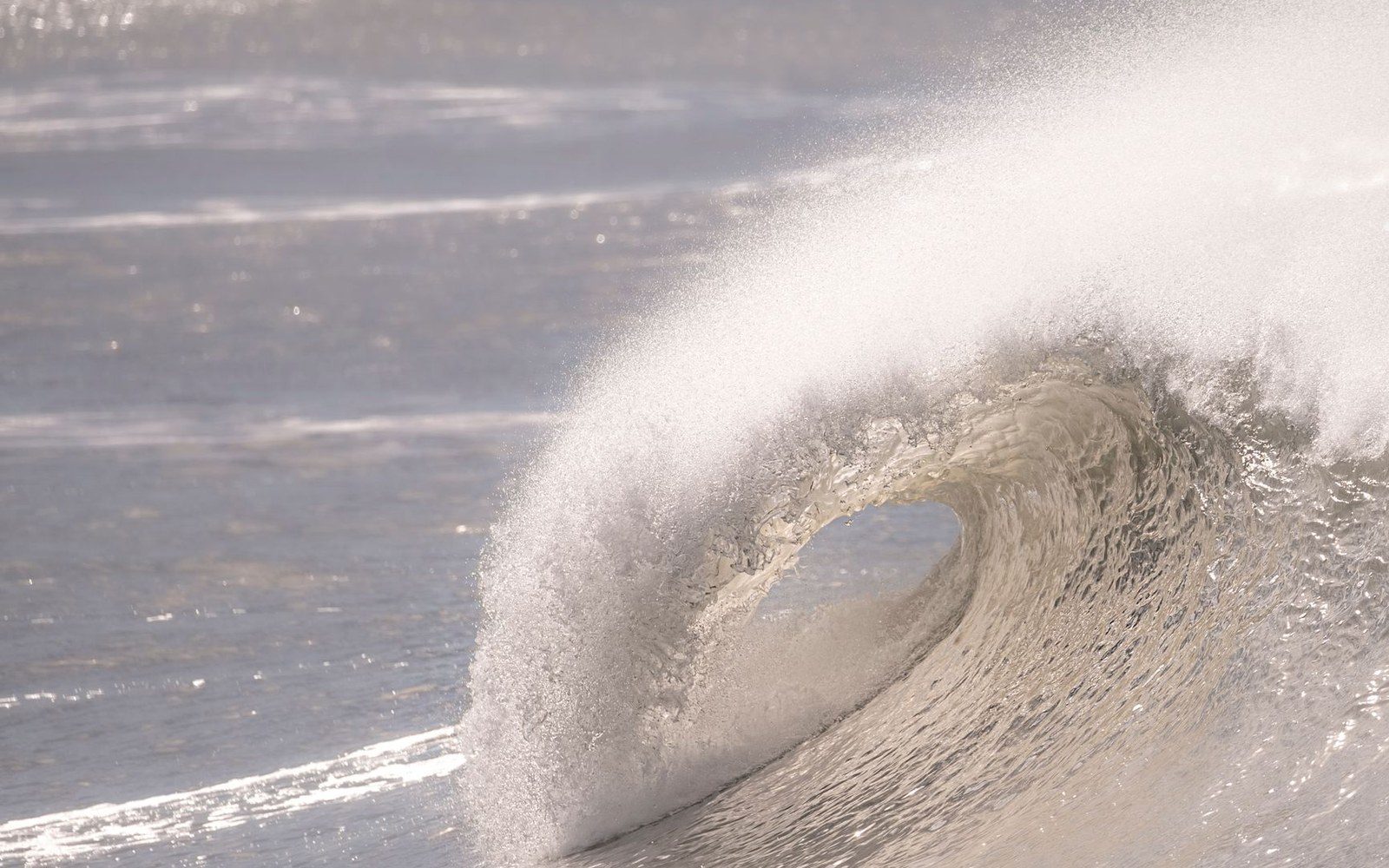
A breaking wave at Pipeline or Teahupo'o lasts, from take-off to exit or wipeout, somewhere between two and eight seconds. Played back at 24 frames per second — the standard cinema rate since the sound era — that interval compresses into precisely what the eye already sees. Raise the frame rate to 1,000 or 1,500 frames per second and the same two seconds of water become more than a minute of screen time. Droplets hang. The lip of a wave peels apart into discrete sheets. The interior of a barrel — that hollow cylindrical cavity the genre has always centred on — becomes a landscape you can read in detail rather than a blur you can admire.
Chris Bryan has built a practice almost entirely around that gap between capture rate and playback rate. Working from the mid-2000s onward, he has positioned high-speed cinematography — shooting at frame rates far above the 24 fps baseline — as the primary visual argument of his films rather than a punctuation device inside a conventionally edited surf movie.

A port, dried between sets.
Photo: Alina Kurson / Pexels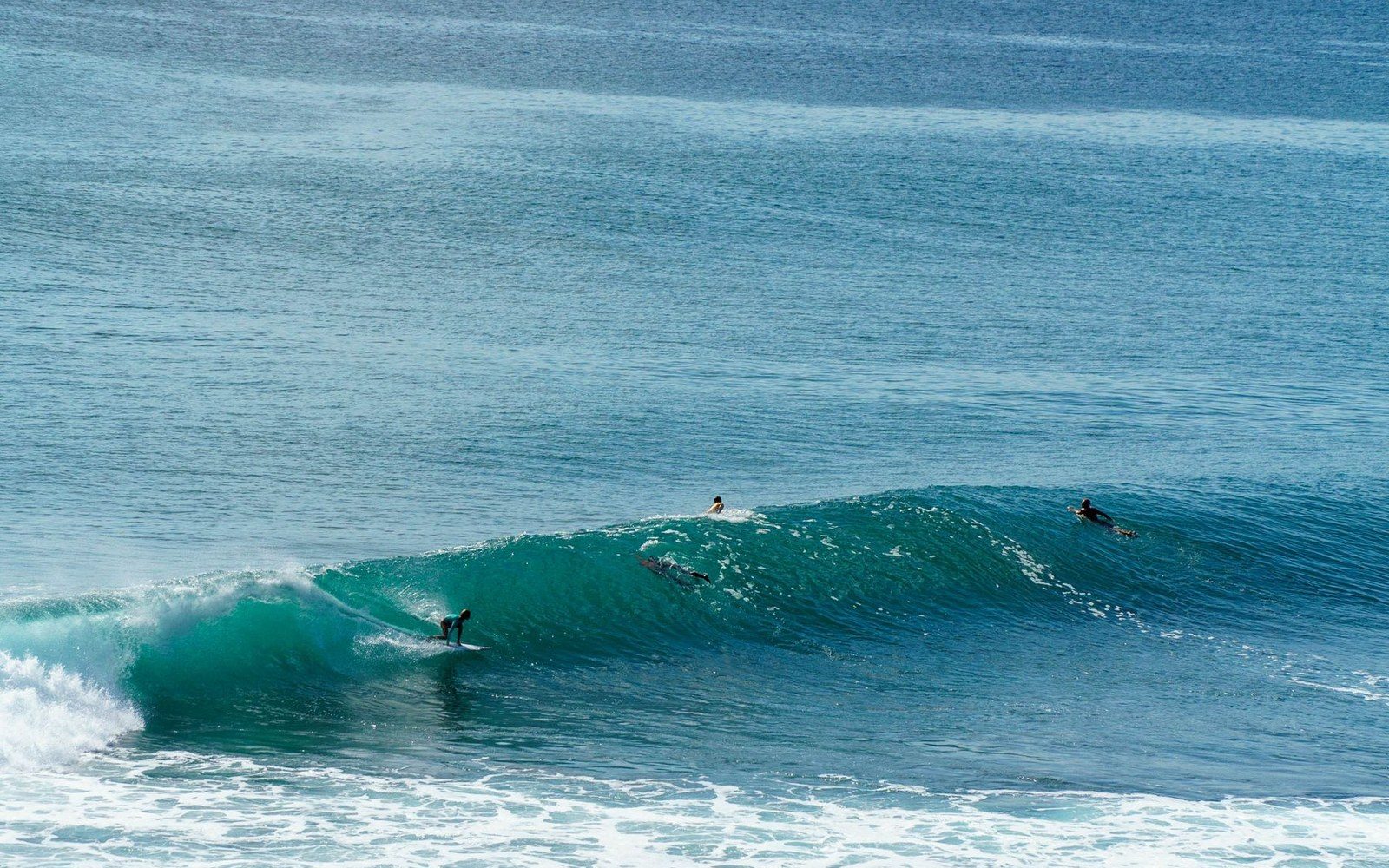
The bluff angle compresses the face, which is most of the reason the genre kept looking for a way to get a lens into the water instead.
Photo: Lucien Schreiber / PexelsThe Cameras and the Housing
The specific camera systems Bryan has used include the Phantom Flex and its predecessor Phantom HD, manufactured by Vision Research, which are the industry reference for high-speed digital acquisition. Vision Research's Phantom cameras are capable of sustained shooting above 1,000 frames per second at resolutions that survive large-screen projection — a requirement that eliminates most high-speed alternatives, which trade resolution for speed at extreme frame rates.
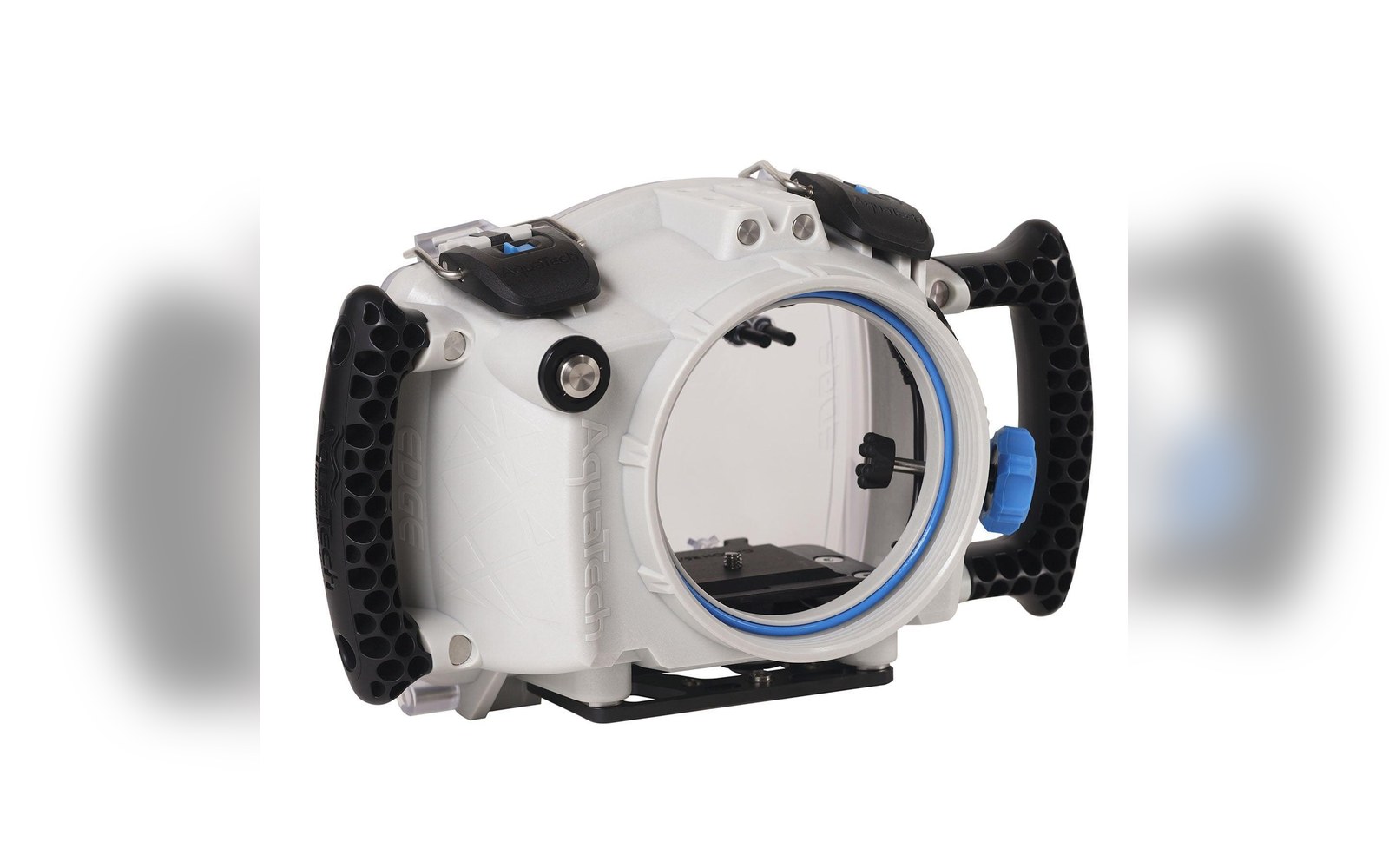
The engineering problem is the housing. A water housing — the waterproof enclosure that protects a camera inside breaking surf, with a sealed optical port for the lens — must be built around the camera's exact body dimensions. Phantom bodies are large by surf-cinematography standards; the housings required for them are correspondingly massive and heavy. Bryan has worked with custom-built enclosures rather than the stock housings common in mainstream surf filming. The optical port on a housing used for barrel-interior work is typically a dome element that compensates for refraction between air and water; at the proximity distances Bryan favours, dome diameter and optical precision determine whether the image is sharp or aberrated.

The 70–200 kept the camera dry and gave up the thing water work is for — the frame from inside the wave rather than beside it.
Photo: Maël BALLAND / PexelsHis short film I Am Four Salt Walls (2010) is the clearest single document of what the system produces. Phantom footage of waves at Shipstern Bluff in Tasmania and elsewhere runs at rates that convert fractions of a second into extended slow-motion sequences. The wave surface texture — normally smoothed away by motion blur at standard frame rates — becomes granular, almost geological. The film circulated widely online and in festival contexts and established the visual template that subsequent high-speed surf work has largely followed.
What It Changed
Before Bryan's sustained application of Phantom-class cameras to water cinematography, high-speed shots appeared in surf films as brief inserts — money shots embedded in otherwise standard-speed edits. I Am Four Salt Walls treated slow motion as the complete grammar of the film, not an ornament. That structural decision separated his work from the video-generation aesthetic that Taylor Steele's Momentum (1992) had codified: fast cuts, music-video pacing, action compressed rather than expanded.
Key camera facts
| Phantom Flex / Phantom HD | Vision Research high-speed digital cameras; capable of sustained shooting at 1,000+ fps at projection-grade resolution |
|---|---|
| Water housing | custom-built for Phantom body dimensions; heavier and larger than standard surf housings |
| Optical port | dome element to correct air-to-water refraction at close barrel-interior distances |
| 24 fps | standard cinema playback rate; baseline against which high-speed acquisition is measured |
| 1,500 fps | representative capture rate; turns ~2 seconds of wave into over a minute of slow-motion screen time |
The consequences for the genre were practical. Cinematographers working for Teton Gravity Research and in the broadcast pipeline for the World Surf League's Championship Tour events began incorporating high-speed acquisition into standard shoot kits. GoPro's slow-motion modes — available at consumer price points by the early 2010s — created a mass-market appetite for the expanded-time image that Bryan's festival-circuit work had first established as a serious cinematic mode. The visual language that emerges at 1,500 frames per second is now so familiar it reads as the default register of surf cinematography, which makes it easy to forget that it required a specific person, a specific set of cameras, and a willingness to carry very heavy equipment into breaking water.
 The Box Costs More Than the Camera Inside It
 The Swim Is the Equipment
 Jack McCoy Shot from a Ski Before Anyone Called It Coverage