What a Water Housing Actually Does
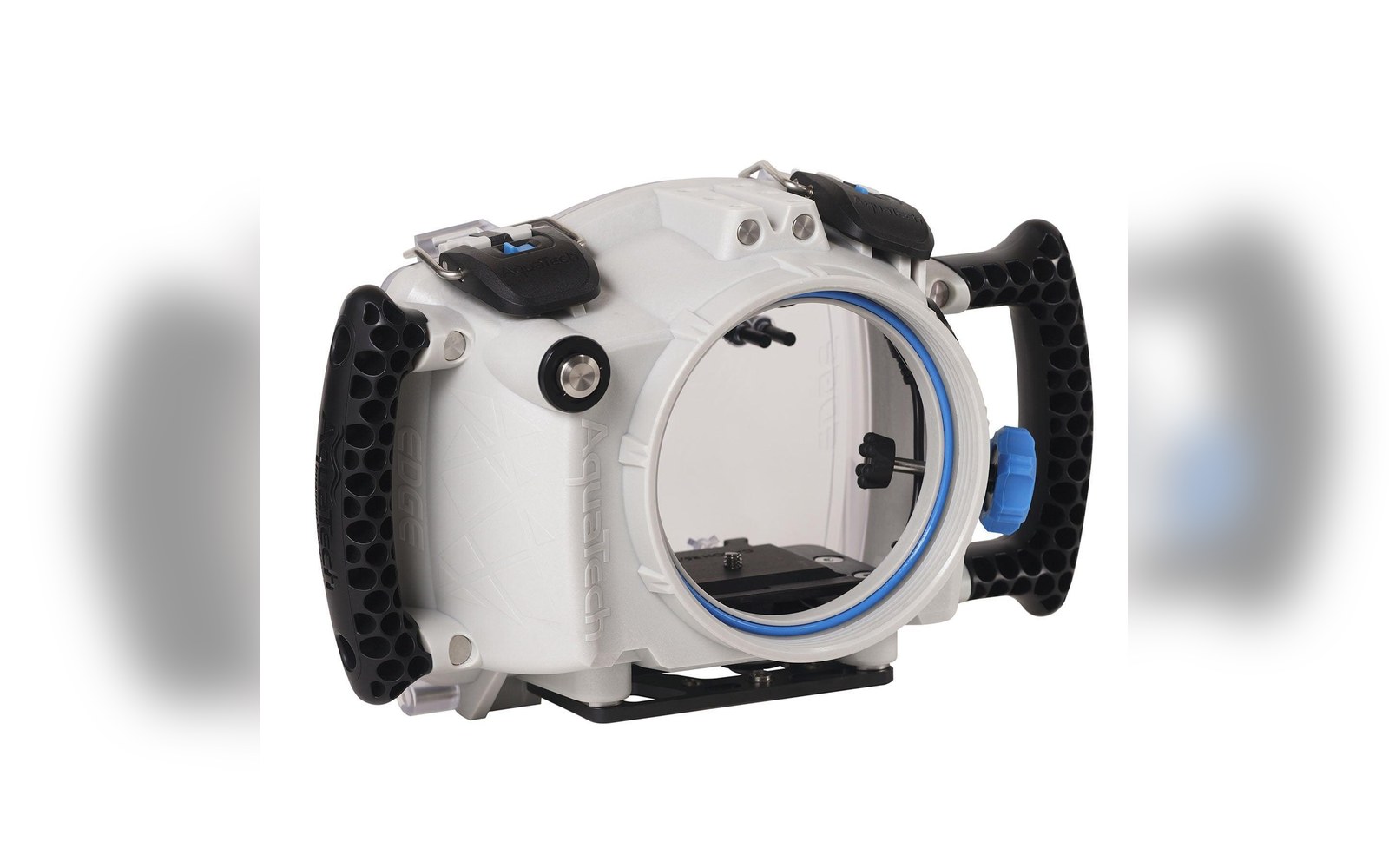
A water housing is not a case. It is a precision enclosure, machined from aluminium or high-density polycarbonate, that seals a cinema or still camera against saltwater, sand and the hydraulic violence of a breaking wave. The seal must hold under the sudden pressure of a wipeout — a wave lip travelling at speed can slam a housing against the reef or the cinematographer's body with enough force to destroy an unprotected camera in a single impact. The housing absorbs that shock and keeps the mechanism inside dry and functional.
At the front of every housing sits the optical port: a dome or flat element of precision glass or acrylic through which the camera's lens projects. The port is not interchangeable with any lens; each combination — camera body, lens focal length, port geometry — must be matched. A dome port paired with a wide or fisheye lens corrects for the refraction that water introduces at the glass-air boundary; a flat port suits longer focal lengths. Choose the wrong port and the image loses sharpness at the edges regardless of how good the glass behind it is.

A port, dried between sets.
Photo: Alina Kurson / PexelsThe Systems and What They Cost
Three manufacturers have dominated professional surf cinematography: SPL (Salty Surf) Housings, Aquatech, and CMT (Custom Marine Technologies). Each builds for different camera platforms and different use cases, and their pricing reflects the specificity of the engineering involved.
Aquatech, based in Australia, produces housings for Canon, Nikon and Sony mirrorless bodies that have become standard in both surf photography and documentary second-unit work. Their housing for a Sony Alpha series body — among the most commonly cited configurations in published trade reviews — has been listed at prices ranging from roughly USD 1,800 to over USD 3,000 depending on model year and port package, while a comparable Sony body itself can be had for under USD 2,500. The housing costs more than the camera. That inversion is not unusual; it is the norm.

The 70–200 kept the camera dry and gave up the thing water work is for — the frame from inside the wave rather than beside it.
Photo: Maël BALLAND / PexelsSPL Housings, also Australian, occupies the high end of the dedicated surf housing market. Their cinema-grade systems, built around RED and ARRI digital cinema bodies, are custom-ordered and priced accordingly — configurations for cinema cameras have been quoted in the USD 8,000–15,000 range before ports and accessories. The cinema camera inside might cost less per unit than the engineering that keeps it alive at Pipeline or Teahupo'o.
CMT builds custom housings for the specific camera bodies used in high-end documentary and commercial water work — the kind of production where Chris Bryan's high-speed cinematography at 1,500 frames per second demands a housing that can keep pace with a Phantom camera during a session at a heavy reef break. The Phantom Flex, which Bryan has used, is itself a rental instrument valued in the hundreds of thousands of dollars; the housing protecting it must be trusted absolutely.
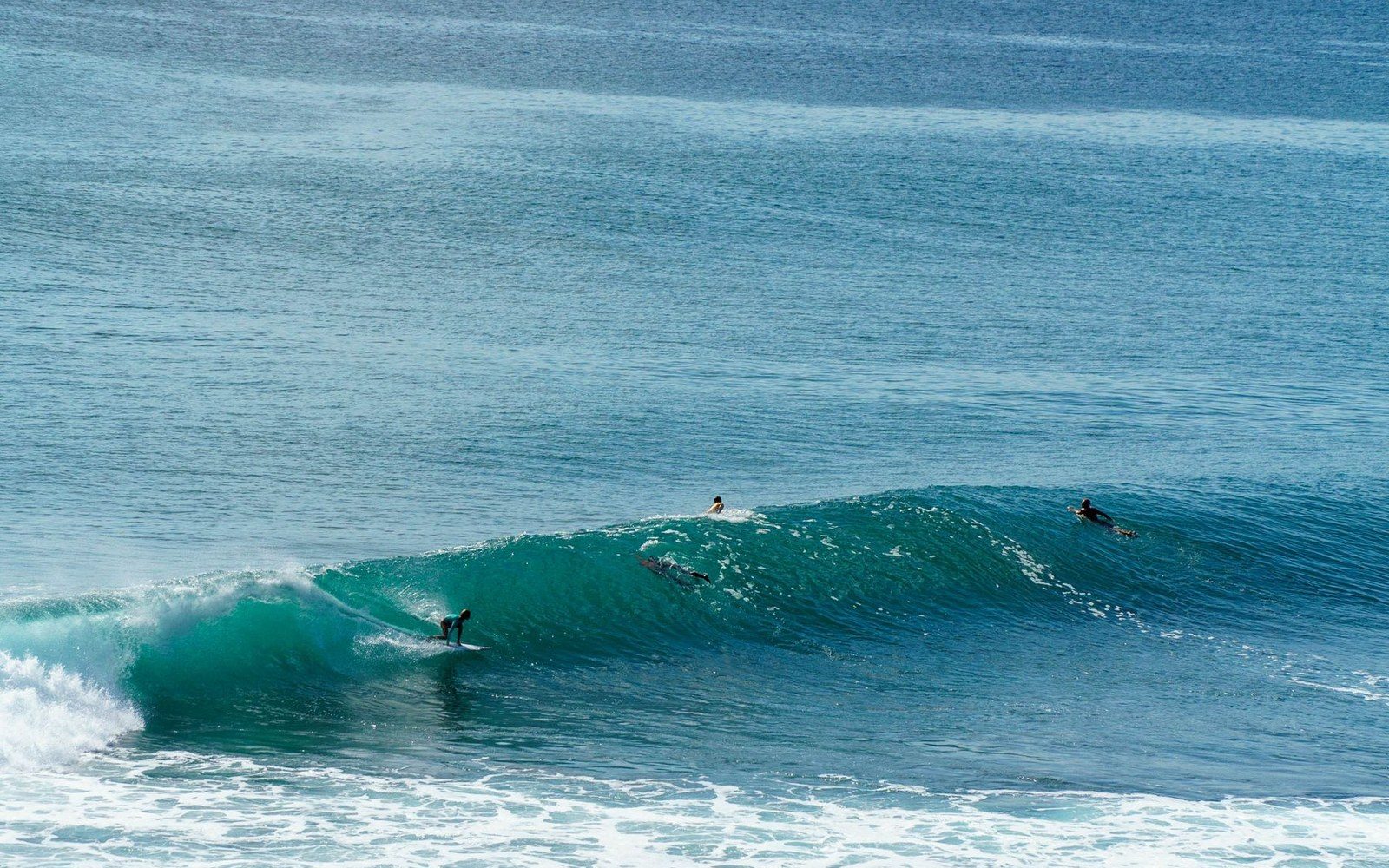
A set at Swami's, from the bluff.
Photo: Lucien Schreiber / PexelsHow the Housing Governs the Shot
The choice of housing determines not just which camera fits inside, but which lenses are optically compatible, how deep a cinematographer can safely dive before pressure ratings are exceeded — typically rated to 60 or 90 metres for professional systems, though surf cinematographers rarely need more than three or four — and how long a shooting session can run before O-ring maintenance is required. A housing left unserviced becomes a liability: a single degraded O-ring is enough to flood a camera.
The fisheye lens inside a dome port, positioned centimetres from a curling barrel wall, is the defining image of surf cinema. That image depends entirely on the housing holding. Without it, there is no shot — only a ruined camera and a wave that has already passed. The cinematographer's breath-hold, described elsewhere as a form of equipment in its own right, extends the time available inside each wave; but the housing is what makes that time technically possible in the first place.
Port compatibility charts published by manufacturers like Aquatech list hundreds of lens-port combinations, and a cinematographer moving from one camera system to another must reassess the entire chain: body, port, dome and seal — not just the glass.
The camera is replaceable. The housing decision is not made lightly.
 The Swim Is the Equipment
 Chris Bryan and What Happens at 1,500 Frames Per Second
 Jack McCoy Shot from a Ski Before Anyone Called It Coverage