What the Film Is Made Of
Girls Can't Surf arrived in Australian cinemas in 2021, directed by Sydney-based filmmaker Christopher Nelius and produced through the independent outfit Garage Entertainment. It is a feature documentary about the generation of women who built professional surfing's women's tour during the 1980s, and about the institutional resistance that generation faced at nearly every level of the sport. The title is drawn from a phrase the film's subjects report hearing repeatedly during that period — not a provocation invented for marketing, but a recurring piece of ambient discouragement that the documentary uses as structural context.
Nelius assembled the film from two primary materials: contemporary interviews conducted with the principal figures, and archival footage sourced from that era's competition coverage, news segments, and existing surf films. The archive is uneven in quality, as anyone who has tried to locate broadcast-quality footage of early 1980s women's professional surfing will recognise. Some of it is grainy, colour-shifted, shot on formats that were never intended for theatrical projection. Nelius left it that way. The imperfect archive becomes evidence of its own kind — footage that looks as neglected as the careers it documents felt at the time.
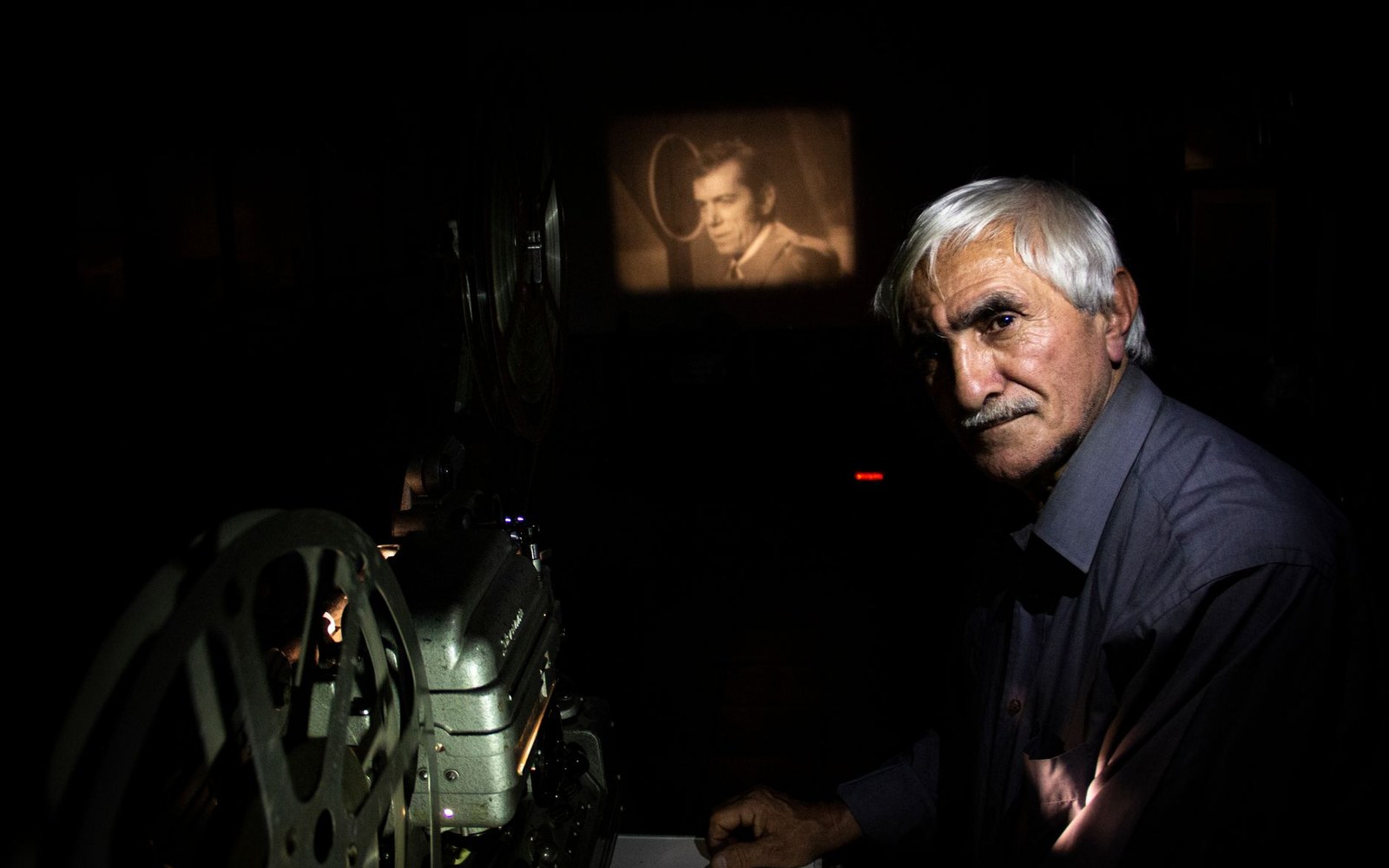
A booth, mid-reel.
Photo: Mehmet Orak / PexelsThe interview subjects appear in conditions that are deliberately unhurried. These are long, considered conversations, not promotional sound bites. The production took several years in development; Nelius and his team worked to build the kind of access that allows a subject to contradict herself, revise an answer, say something complicated. The result is a film that does not need a narrator to organise its argument, because the argument emerges from the accumulation of accounts across different decades and different relationships to the same events.
The Tour It Documents
The specific history at the centre of Girls Can't Surf is the women's professional circuit during the 1980s — a period when competitive women's surfing existed inside an institutional structure that chronically underfunded and undervalued it. The film covers the prize-money disparity between the men's and women's tours, the conditions under which women competed, and the ways that coverage and sponsorship reflected the broader cultural attitude encoded in the film's title.
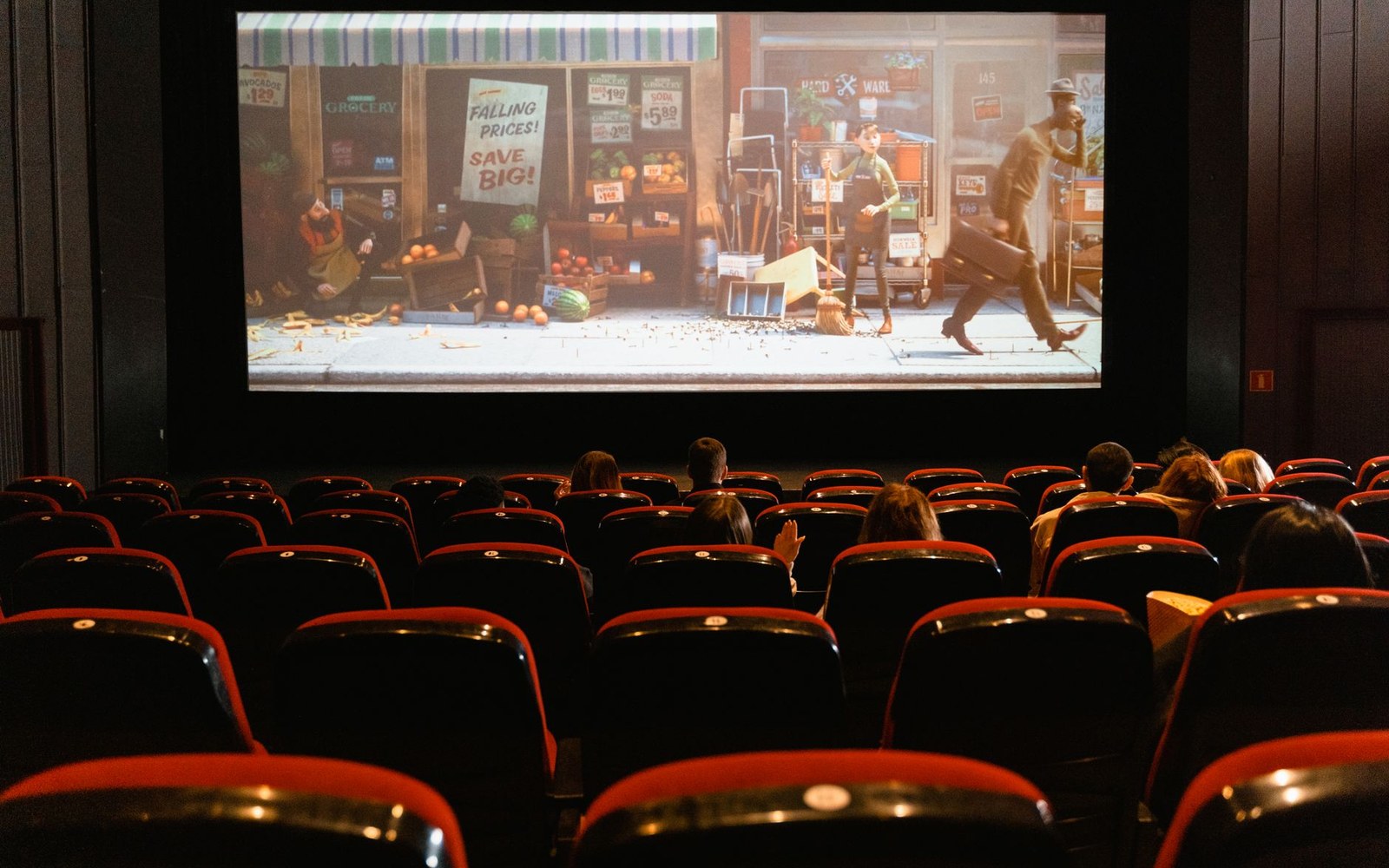
The circuit's basic unit: a room somebody already owns, a print or a file, and an audience that sat down on purpose rather than scrolled past it.
Photo: Tima Miroshnichenko / PexelsThe surfers whose careers and testimonies carry the documentary include Frieda Zamba, the Floridian who won four world titles between 1984 and 1988, and Layne Beachley, the Australian who went on to win seven world titles, a record for the women's tour. Lisa Andersen — who won four consecutive world titles between 1994 and 1997 and whose image appeared on the cover of Surfer magazine in 1994 with a caption that directly echoed the film's title — is among the central voices. The film does not limit itself to the most decorated; it includes women whose professional careers were significant but whose names did not travel as far, making their accounts of the period structurally important to the argument that something systemic, not merely personal, was at work.
The 1980s women's professional tour operated under what was then called the Association of Surfing Professionals, which later restructured into the World Surf League. The WSL's eventual adoption of equal prize money in 2019 provides the film's implicit historical endpoint — a policy change that took place decades after the period the documentary covers, and that the film positions as belated rather than generous. Nelius does not editorialize directly about that timeline; the interview subjects do it for him.

Foam dust, in a shaft of light.
Photo: Harold Granados / PexelsThe geography the film inhabits is predominantly Australian and Hawaiian, which tracks with where the women's tour ran its most prominent events during the 1980s. Pipeline on Oahu's North Shore and Bells Beach in Victoria appear in archive footage. The California surf scene — and the San Diego area specifically — enters mainly through the professional histories of some subjects rather than as a filming location.
Assembly and Structure
The film runs approximately one hundred minutes and uses a broadly chronological structure that follows the careers of its principal subjects from the late 1970s into the 1990s. It is not a strict biographical portrait of any single surfer. Instead it operates as a collective history in which individual careers become illustrative chapters. When one surfer's account reaches a particular point in the political history of the tour — a dispute over prize money, a scheduling decision, a moment of institutional dismissal — the film cuts to another subject who was present at the same moment from a different angle.
This structural choice is consistent with the film's central argument: that the conditions the women faced were not the product of individual bad luck or particular hostility, but of a shared environment. The cross-cutting between testimonies is the argument made formal. It also means that the film demands a viewer who is willing to hold several careers in mind simultaneously, tracking relationships and rivalries and allegiances that span years.
The broader tradition of Australian surf documentary filmmaking, which runs from Albert Falzon's Morning of the Earth in 1971 through Jack McCoy's work in the 1980s and 1990s, provides the cultural context within which Girls Can't Surf operates and against which it implicitly positions itself. That tradition almost entirely documented men. Nelius acknowledged this inheritance by making a film that corrects the record rather than extends it.
The archive sourcing required significant effort. Surf competition footage from the early 1980s was not systematically preserved in the way that, say, network television sport archives were. Much of what survived did so in the hands of private collectors, former competitors, and the organisations that ran the events. Garage Entertainment's production notes indicate that the team spent years locating usable material. The National Film and Sound Archive of Australia holds relevant material related to Australian surf film history and provided a point of reference for production teams working in this period.
Release and Reception
Girls Can't Surf opened in Australian cinemas in March 2021 and went on to screen at surf film festivals internationally. It was acquired for wider distribution following its theatrical run. The film received a nomination at the Australian Academy of Cinema and Television Arts Awards — an institutional acknowledgement that positioned it outside the niche of the specialist surf film circuit and into documentary filmmaking more broadly.
The reception was notable for the degree to which it was reviewed not only by surf-media outlets but by mainstream film criticism. This was not accidental. The film's subject — professional women athletes in a male-dominated industry, institutional prize-money discrimination, the political organisation of a marginalised cohort — was legible to any documentary audience, not just to viewers who follow competitive surfing. Nelius built the film to function at that level. The surf footage is specific and technically accomplished, but it is never used as spectacle for its own sake. Every sequence of a wave being surfed in the film serves the biographical and political argument rather than interrupting it.
For a genre that spent most of its first fifty years documenting men surfing waves for other men to watch, Girls Can't Surf represents a structural correction assembled from the evidence that the era's filmmakers largely chose not to make. The archive Nelius found was incomplete because most of the people who could have been filming were filming somewhere else.
 Bruce Brown Sold Tickets from the Back of a Van
 Morning of the Earth and the Turn Toward Something Quieter
 Momentum, 1992: The Year the Genre Went to Video