How the Film Was Built
Riding Giants arrived with a pedigree unusual for surf cinema. Stacy Peralta, already known for Dogtown and Z-Boys (2001), came to the project as a documentarian with mainstream credibility — Sundance had given Dogtown its Audience Award and Director's Award, and that currency mattered when the time came to place a surf film in the same room. Riding Giants premiered at Sundance in January 2004, becoming the first surf documentary to open the festival, and Sony Pictures Classics picked it up for theatrical distribution — a route that bypassed the surf-industry ecosystem almost entirely.
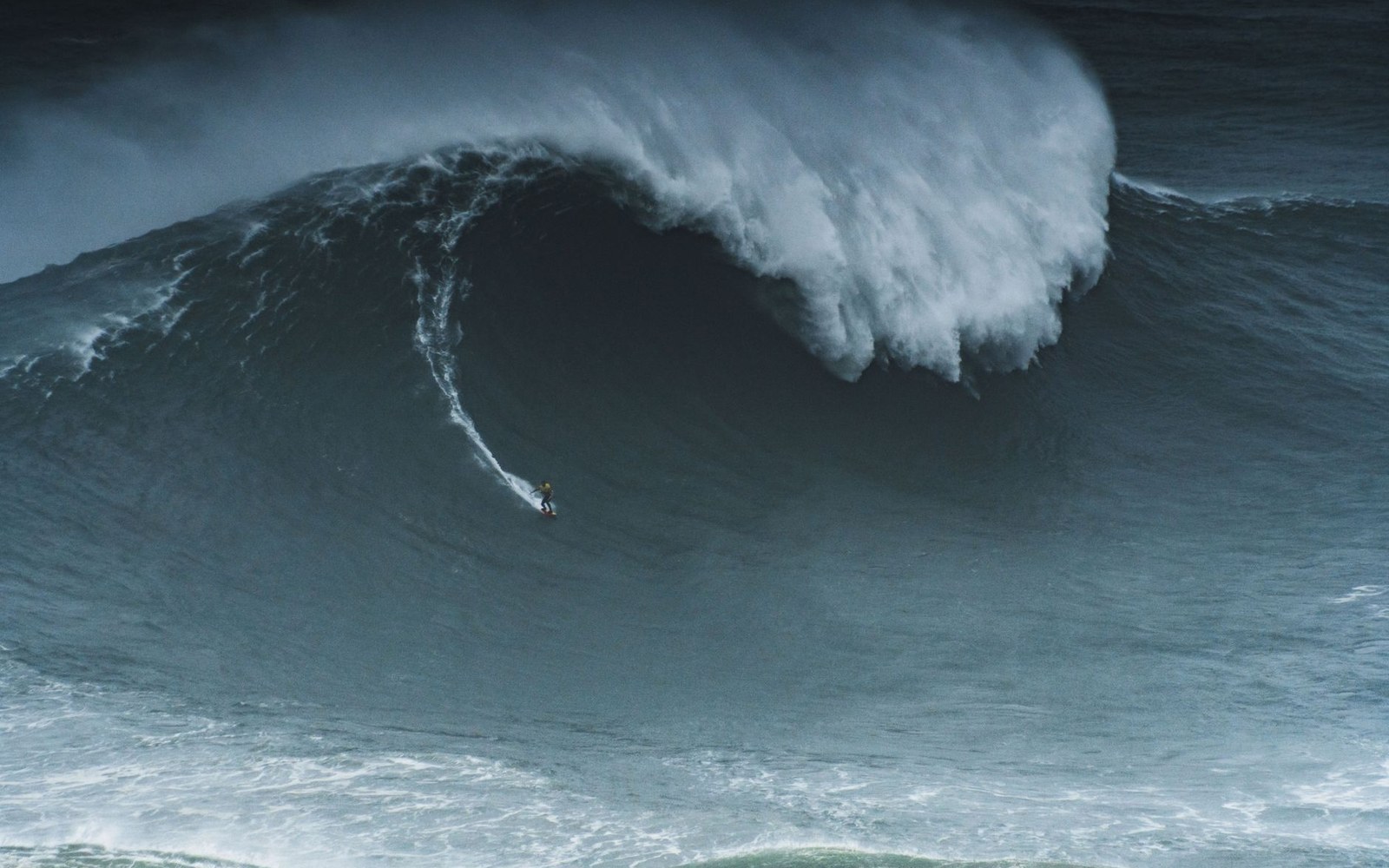
The film's construction set it apart from the genre's prevailing mode. Where the video generation, launched in the early 1990s by films like Taylor Steele's Momentum, was built on rapid-cut performance footage shot close to the action, Peralta built a historical argument. He structured Riding Giants in three acts organized around three figures — Greg Noll, Jeff Clark, and Laird Hamilton — each representing a distinct era and a distinct relationship to scale. Noll at Waimea in the late 1950s, Clark surfing Mavericks alone through the 1970s and 1980s, Hamilton and the tow-in revolution at Teahupo'o, Tahiti and Jaws on Maui. The structure borrowed from Ken Burns as much as from Bruce Brown.
A booth, mid-reel.
Photo: Mehmet Orak / Pexels
Board design decided what a camera could catch: a shorter, looser board put manoeuvres in front of a lens that had been framed for trim.
Photo: Harold Granados / Pexels
The house, before a feature.
Photo: Tima Miroshnichenko / PexelsArchival Work and What It Cost
The archival challenge was substantial. Footage of Noll's Waimea sessions existed in fragmentary form, much of it in private collections and in varying states of deterioration. Peralta and his team worked to locate and restore material that had never been cut together into anything coherent, treating surf history the way a mainstream documentary might treat civil-rights photography: as a primary record worth the effort of excavation. Still photographs by Don James and others were integrated using slow zooms in the manner of archival documentary convention, lending them a weight the genre rarely assigned to its own past.
The Mavericks sequence around Jeff Clark raised different problems. Clark surfed the break outside Half Moon Bay, California, largely unobserved for years before other surfers arrived in the early 1990s. Footage from those years was thin. Peralta compensated with interview construction — Clark's account of those sessions carries the sequence — and with contemporary water footage shot at speed and scale that leaves little doubt about what the place demands. Mavericks) had by 2004 acquired its own documented record; the film's editing made that record legible to an audience with no prior knowledge of the break.
The Hamilton material required no excavation. By the early 2000s, tow-in surfing at enormous waves was already a subject of mainstream sports coverage, and footage existed at high quality. What Riding Giants contributed was context — the jet-ski camera platform that Jack McCoy and others had developed for exactly these conditions gave cinematographers access to Hamilton's Teahupo'o and Jaws sessions that would have been unachievable from the water by a swimming operator. The resulting footage, cut against the earlier archival material, made the film's central claim viscerally: that something had changed, fundamentally, in what human beings were prepared to do on a surfboard.
What It Did to the Genre
The distribution outcome was the lasting effect. Sony Pictures Classics gave Riding Giants a genuine theatrical run in 2004, placing it in art-house cinemas alongside non-surf documentary features — a context that forced comparison with films made for audiences who had never seen a breaking wave. Critics received it on those terms, and many found it held up. The film grossed several million dollars theatrically in the United States, a number that had no precedent in surf cinema.
The consequence for the genre was structural. Riding Giants demonstrated that surf documentary could attract a mainstream distributor, reach an audience with no surf background, and be reviewed in the same columns as Fahrenheit 9/11 and Metallica: Some Kind of Monster, which shared its 2004 release landscape. Subsequent surf documentaries with mainstream ambitions — including those funded by Patagonia and released through conventional channels — operated in a space that Riding Giants had opened. The question it left behind was whether the three-act historical argument could be replicated, or whether it had worked precisely once because the history, told that way, was genuinely new.
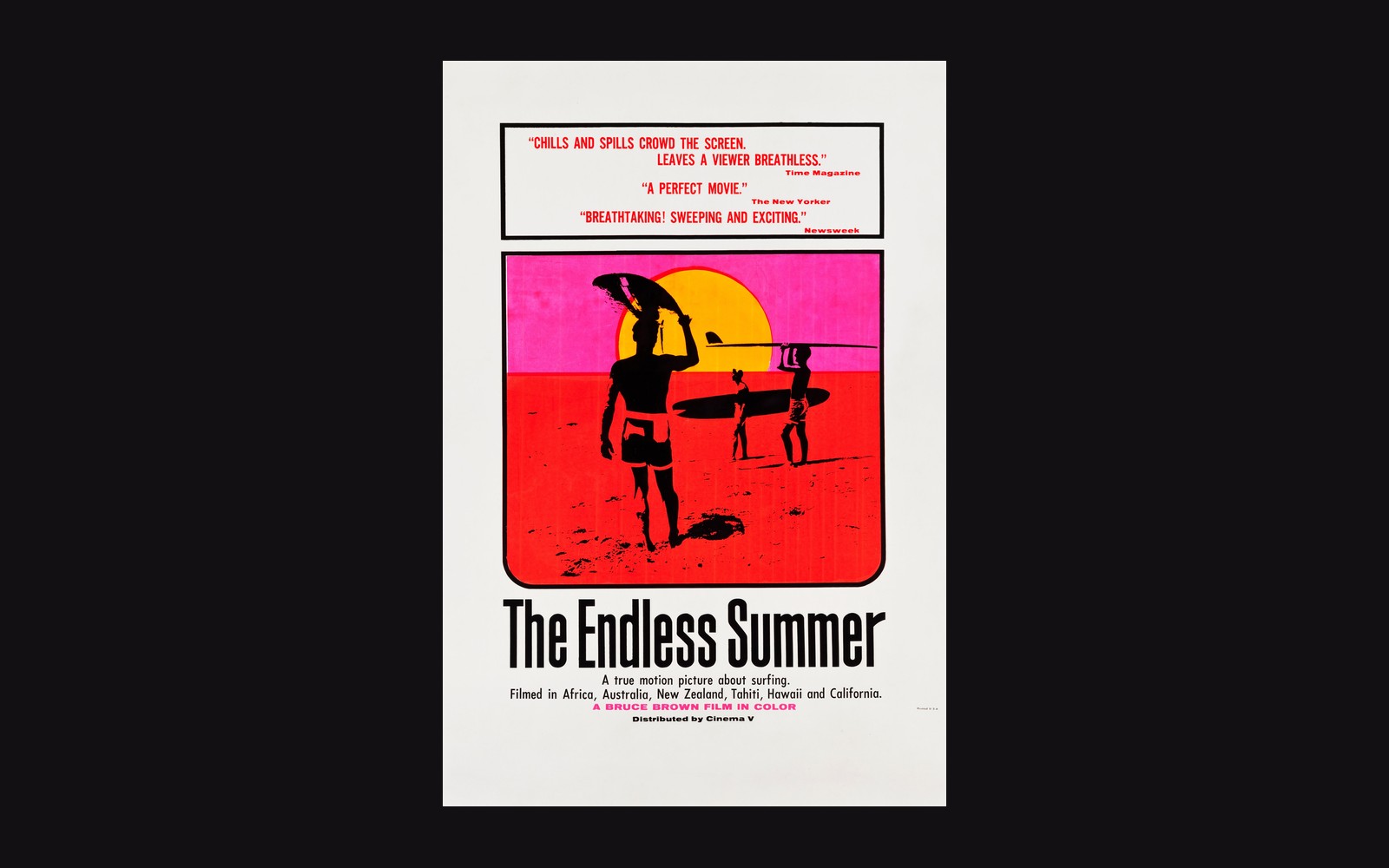 Bruce Brown Sold Tickets from the Back of a Van
 Morning of the Earth and the Turn Toward Something Quieter
 Momentum, 1992: The Year the Genre Went to Video