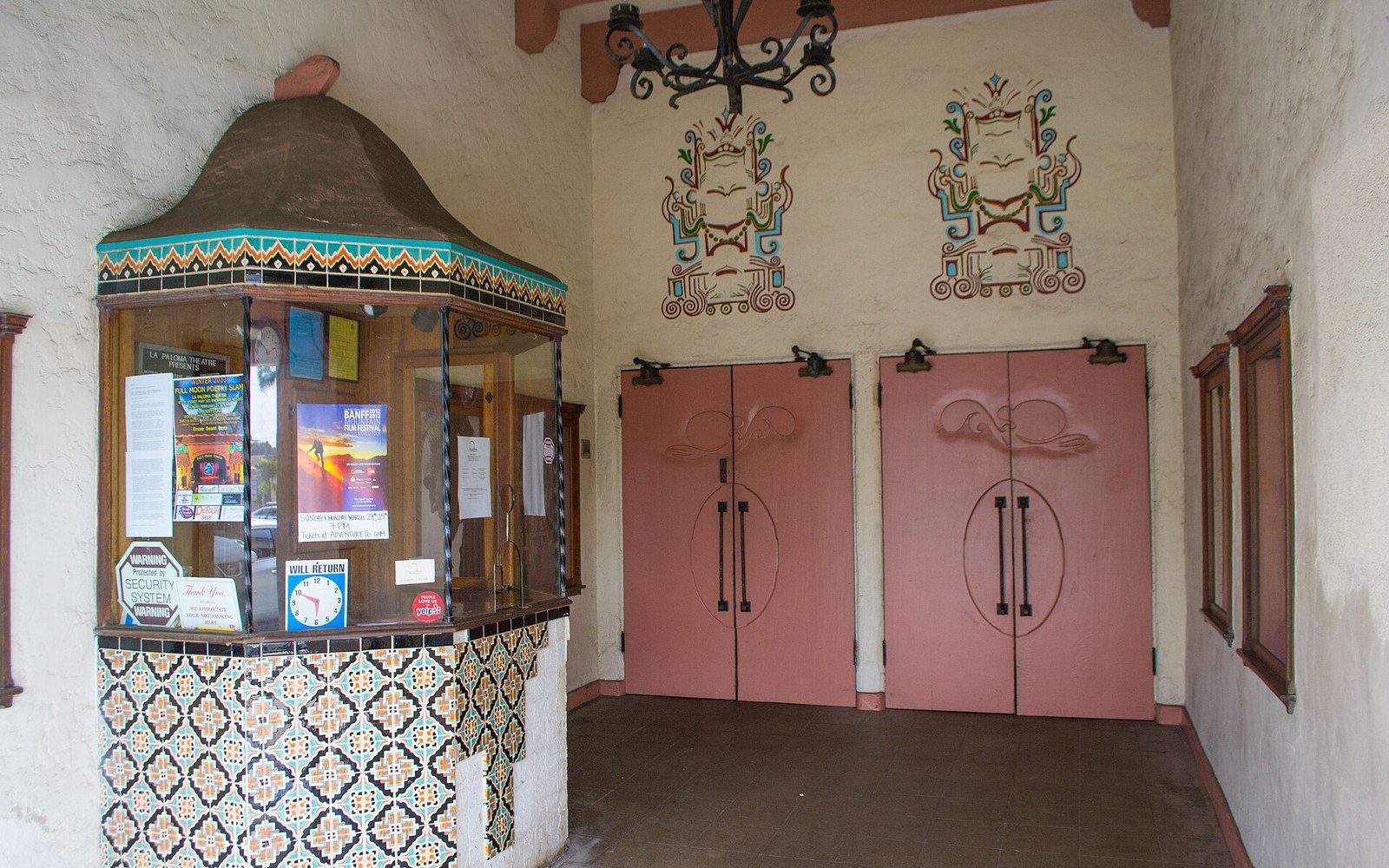
The Building Itself
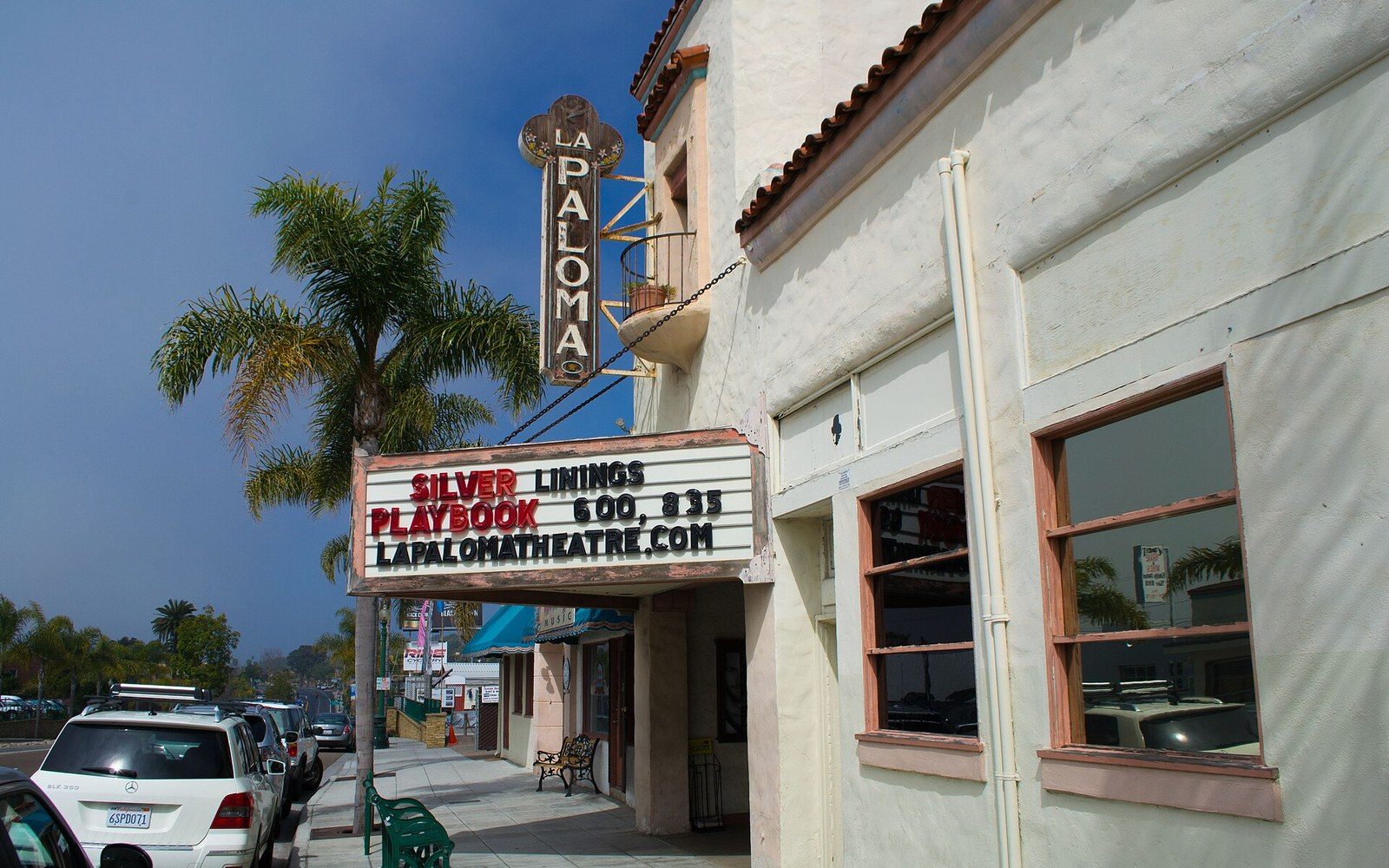
La Paloma Theatre sits on South Coast Highway 101 in Encinitas, California, a few blocks from the Pacific. It opened in 1928, designed in a Spanish Colonial Revival style — stucco walls, a red-tile roof, a marquee that still takes hand-set letters. The auditorium is a single room. There is no multiplex logic here, no corridor of competing titles, no stadium seating calibrated to maximize covers per square foot. The screen faces one audience in one space, and the proportions are close enough to intimate that a filmmaker standing at the front can address everyone in the room without amplification.
That architectural character is not incidental to its role in surf cinema. The genre has always done its most significant work in rooms where the audience and the ocean share a common frame of reference. Encinitas is a surf town — Swami's, Cardiff Reef, and Blacks Beach are within a short drive — and the people who fill La Paloma for a premiere are, in many cases, the same people who were in the water that morning. The building closes the distance between the filmed wave and the lived one.
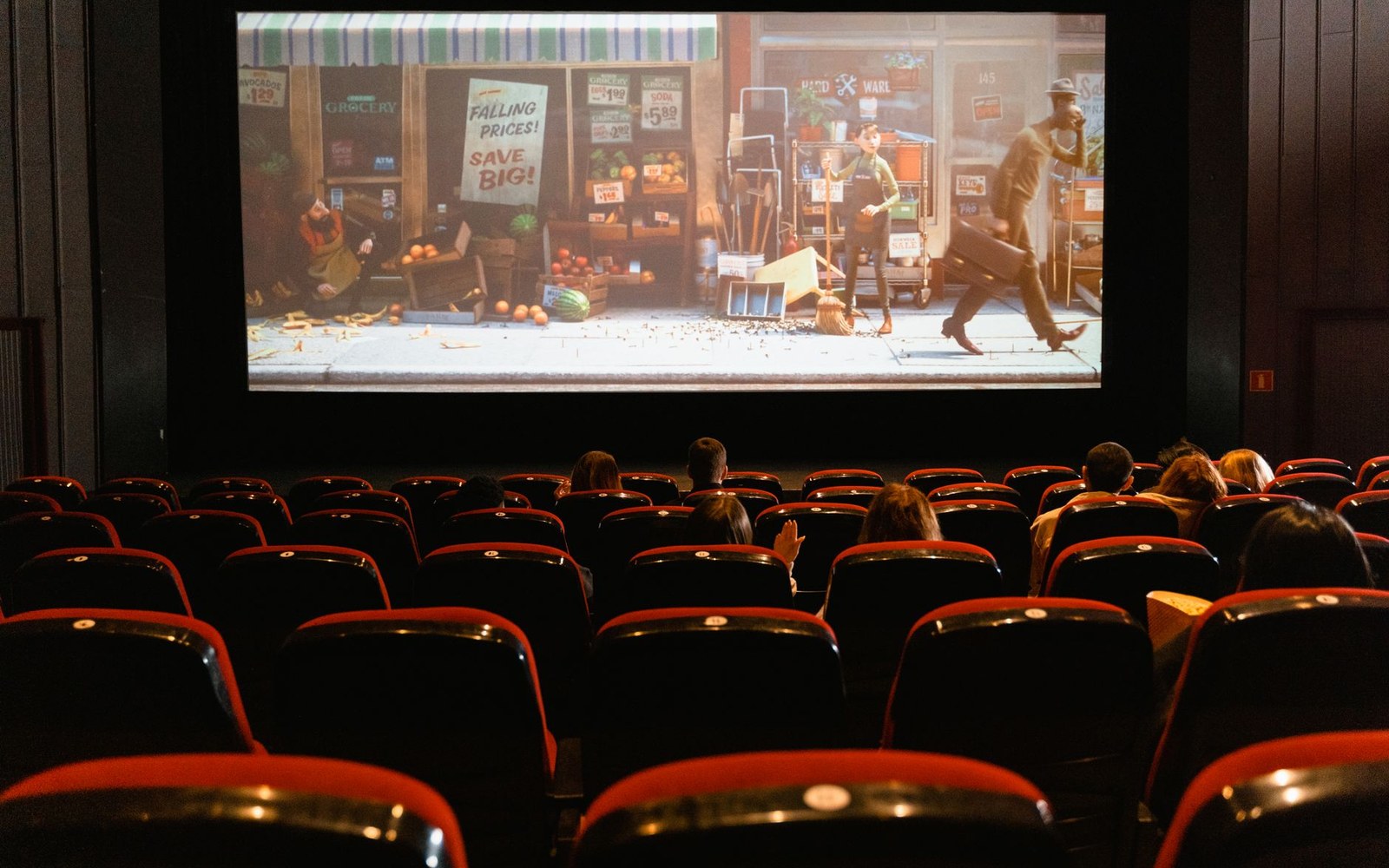
The house, before a feature.
Photo: Tima Miroshnichenko / PexelsLa Paloma is listed on the National Register of Historic Places, which has helped preserve the single-screen layout through periods when smaller theatres across the country were subdivided or shuttered. The ornamental details of the original construction — the decorative tile work, the neon on the marquee face — have survived largely intact. Walking in, the room announces its age without apology.
Why Filmmakers Return
The practical reasons for choosing La Paloma are real but secondary. The theatre can accommodate a paying crowd large enough to give a premiere economic weight, and its location means that sponsors, surfers, and cinematographers based along the San Diego coast do not need to travel far. Filmmakers working the self-distribution model — booking venues directly, collecting receipts without a studio intermediary — have found the theatre a reliable anchor for a Southern California leg.
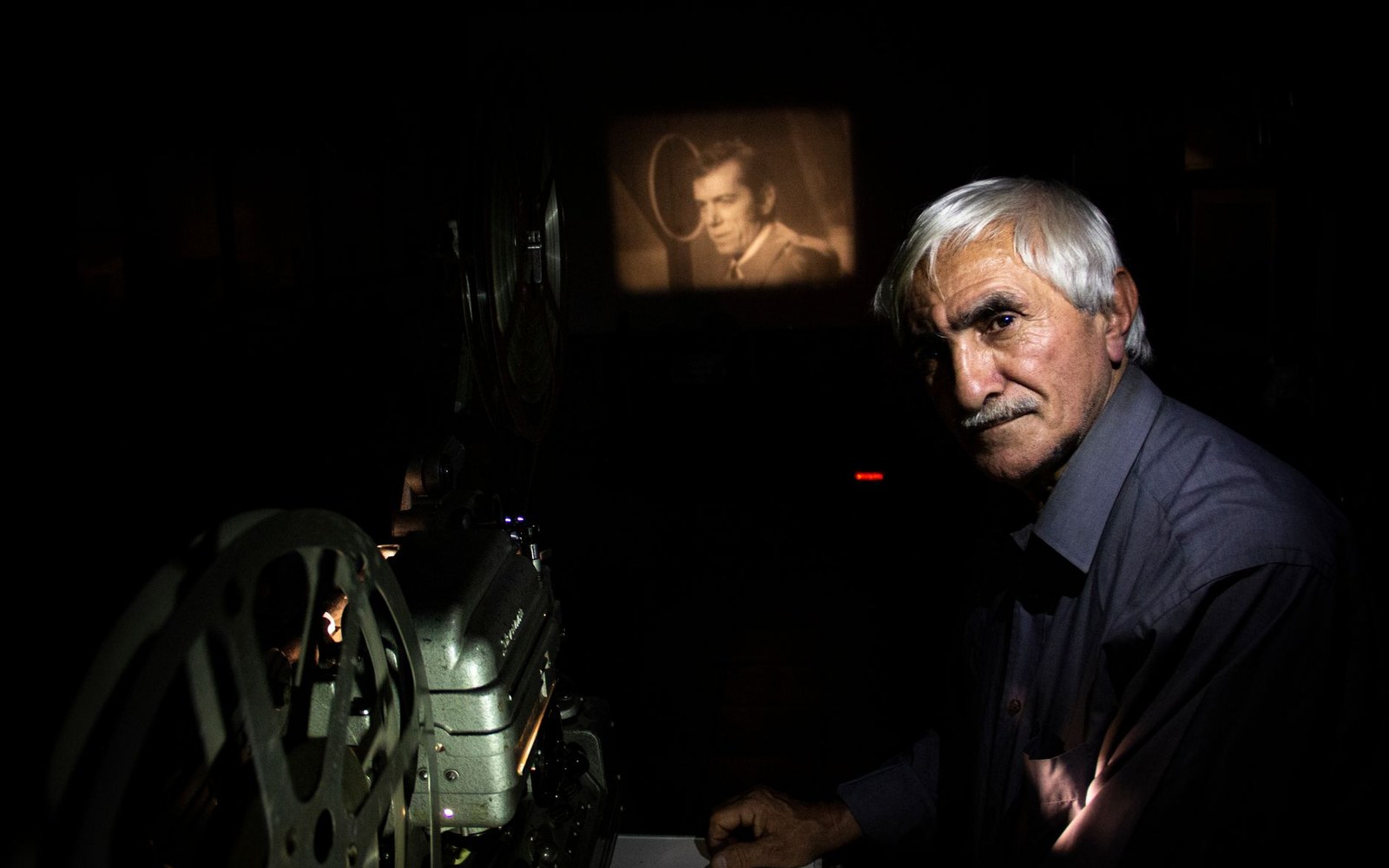
Projection is the part of the chain no streaming window reproduces — a fixed start time, one screen, and no way to pause it.
Photo: Mehmet Orak / PexelsBut the more durable reason is atmospheric. Surf cinema as a genre was built on roadshow logic: Bruce Brown taking The Endless Summer to any room that would have it, building an audience in person rather than through a distributor's catalogue. La Paloma inherits that tradition not by policy but by physical fact. It is the kind of room Brown's generation would have recognised — a single screen, a projection booth, an audience that came to see something rather than to choose from a menu.
Taylor Steele, whose Momentum in 1992 reoriented the genre toward video and speed, has screened work at the theatre. So has the San Diego Surf Film Festival, which has used La Paloma as part of its programme rotation, giving the building a recurring institutional role rather than a one-off one. When a documentary about big-wave surfing or the competitive tour needs a room that will receive it with genuine understanding, the theatre's cultural location matters as much as its screen size.
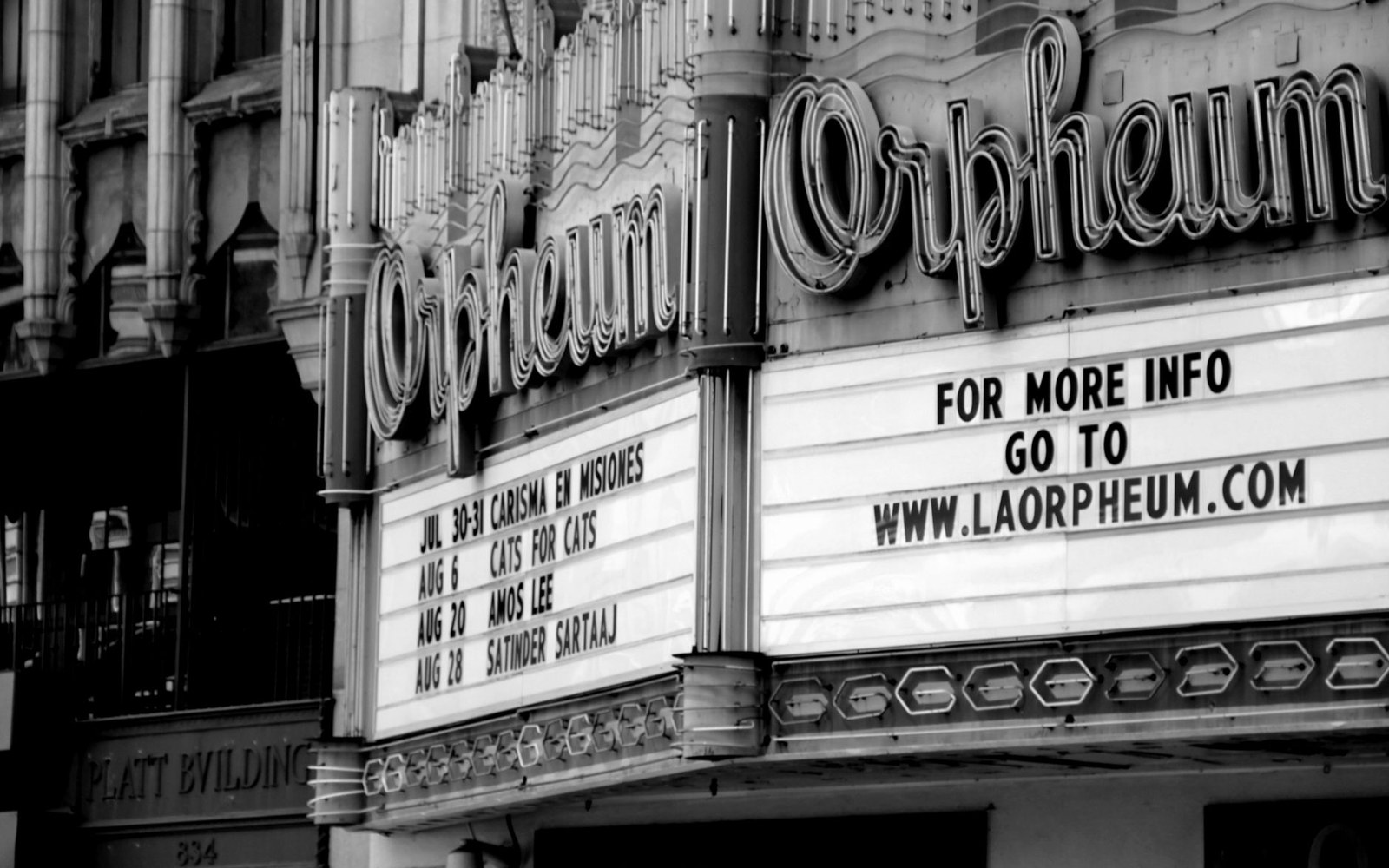
A title in letters, over the street.
Photo: Dalila Dalprat / PexelsThe projection setup has been updated over the decades to handle digital formats, which matters for a genre that shifted from 16mm and 35mm to digital video and, eventually, to the 4K files that contemporary cinematographers like Chris Bryan produce shooting at extreme frame rates. A theatre that could not run a modern DCP would price itself out of contemporary premieres regardless of its character. La Paloma has kept pace without abandoning the room's essential quality.
The Room as Argument
There is an implicit argument in the choice to premiere a surf film at La Paloma rather than at a larger venue in Los Angeles or San Diego proper. It situates the work in the coastal community the film is about, before it reaches broader audiences through festival circuits and digital distribution. The premiere becomes part of the subject matter — a moment when the footage and the place that generated it occupy the same room.
The building at a glance
| Opened | 1928 |
|---|---|
| Location | South Coast Highway 101, Encinitas, California |
| Style | Spanish Colonial Revival (stucco, red-tile roof, hand-set letter marquee) |
| Screen count | one (single-screen house, never subdivided) |
| Historic status | listed on the National Register of Historic Places |
For a genre that has always traded on authenticity, on the claim that what the camera caught was real and the ocean was cold and the wave was moving at genuine speed, that proximity carries weight. La Paloma offers it in a room that has been making the same offer since 1928.
 What the San Diego Festival Has Actually Shown
 Byron Bay: Where the Circuit Goes Australian
 London's Surf Film Festival and the Crowd That Fills It